
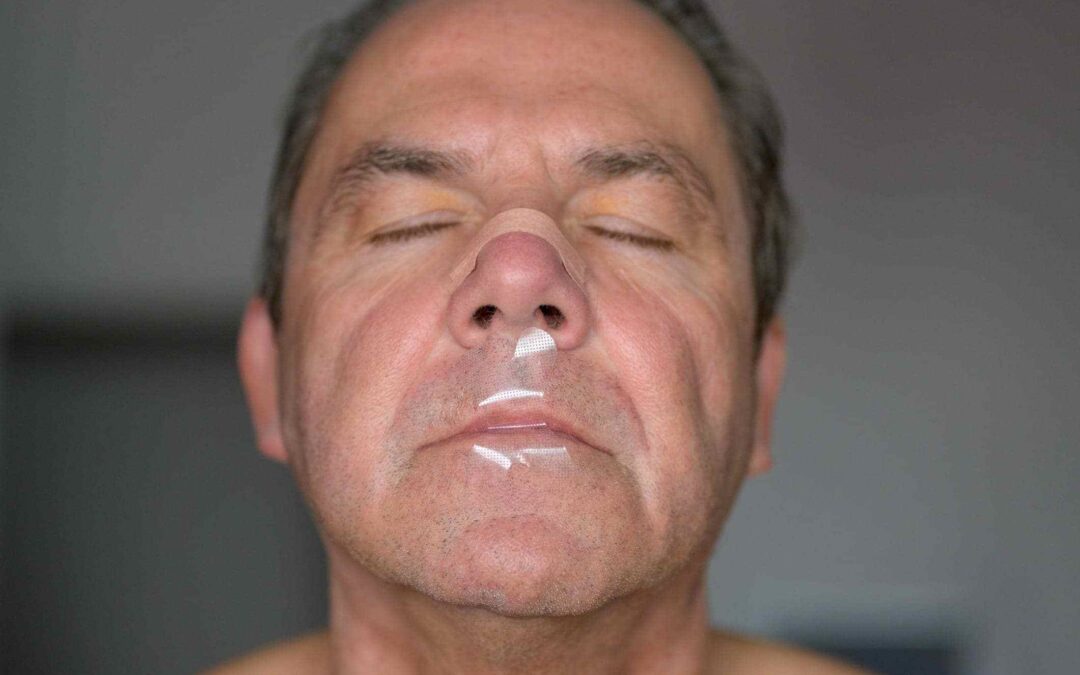
Nasal strips (or breathe easy strips) are essentially just sticky, drug-free bands that give your nostrils a physical lift. They work by pulling on the “nasal valve,” which is that tight bottleneck inside your nose. Using one can actually drop airflow resistance by a good 33%. You’ll mostly see people wearing them to fight off nighttime stuffiness, drown out snoring, or help athletes get enough oxygen through their nose during a heavy workout.
How Do They Actually Work?
They might look like fancy Band-Aids, but there is some cool engineering hidden inside that adhesive.
Every strip has tiny, springy bands built into it. When you press the strip onto your nose, those springs want to pull back into a flat line. That tension creates a constant tugging motion that keeps your nostril walls from collapsing.
In technical terms, this helps you beat the Bernoulli effect. When you inhale quickly, the air pressure inside your nose drops, which can suck your soft nasal tissues shut. The strip acts like a tiny external skeleton, holding the path open so you can keep breathing steadily.
Why People Use Them: Key Benefits
While these are usually found tucked away in the pharmacy’s sleep section, they are handy for way more than just a good night’s rest.
- Clobbering Congestion: Whether it’s a stubborn cold, seasonal allergies, or a deviated septum, these give you an instant, non-pill way to stop feeling so clogged up.
- Muffling the Snore: If your snoring starts in your nose, widening the gap can quiet things down. It smooths out the air so your nose doesn’t vibrate like a leaf.
- Gym Performance: Plenty of runners and bikers wear them to stick with nasal breathing. Your nose is better at warming and filtering air than your mouth, and these strips let you maintain that longer during a sweat session.
- Better Sleep Cycles: When breathing is effortless, your body doesn’t have those tiny “micro-wakeups” all night. You end up spending more time in the deep sleep stages that actually make you feel rested.
Tips for the Perfect Application
If your strip keeps popping off at 3 AM, it’s likely an application error. Here is how to make them stick:
- De-grease Your Face: Rub a little soap or witch hazel on your nose first. If your skin is oily, that adhesive doesn’t stand a chance.
- Placement is Everything: Don’t stick it too high up on the bridge. Aim for the spot where your nostrils just start to flare out.
- The Heat Trick: Once it is on, rub the strip for 10 seconds. The warmth from your skin helps the glue really grab hold.
- Remove with Water: Don’t just rip it off. Use some warm water to melt the glue a bit so you don’t irritate your skin.
Use Case
| Why It Helps | The Result |
| Sleeping | Keeps the nose from caving in and stops “nose-snoring.” |
| Allergies | Manually pries open passages that are swollen from pollen. |
| Exercise | Lets you gulp in more air without having to open your mouth. |
| CPAP Users | Can make the mask feel less claustrophobic by opening the nose. |
Are There Any Side Effects?
Since there is no medicine involved, the risks are basically zero. The only real headache is skin irritation. If you use them every single night, the bridge of your nose might get a little red or dry from the glue.
Pro Tip: If your skin gets angry, just put on a little fragrance-free moisturizer after you peel the strip off in the morning. This lets your skin heal before you put a new one on that night.
When Should You See a Professional?
Breathe easy strips are great for “mechanical” fixes, but they aren’t magic. If you are still gasping for air or your snoring is loud enough to wake the whole house, you might be dealing with sleep apnea. If that is the case, no amount of tape will fix it. You should definitely check in with a doctor to find a real, long-term solution.