
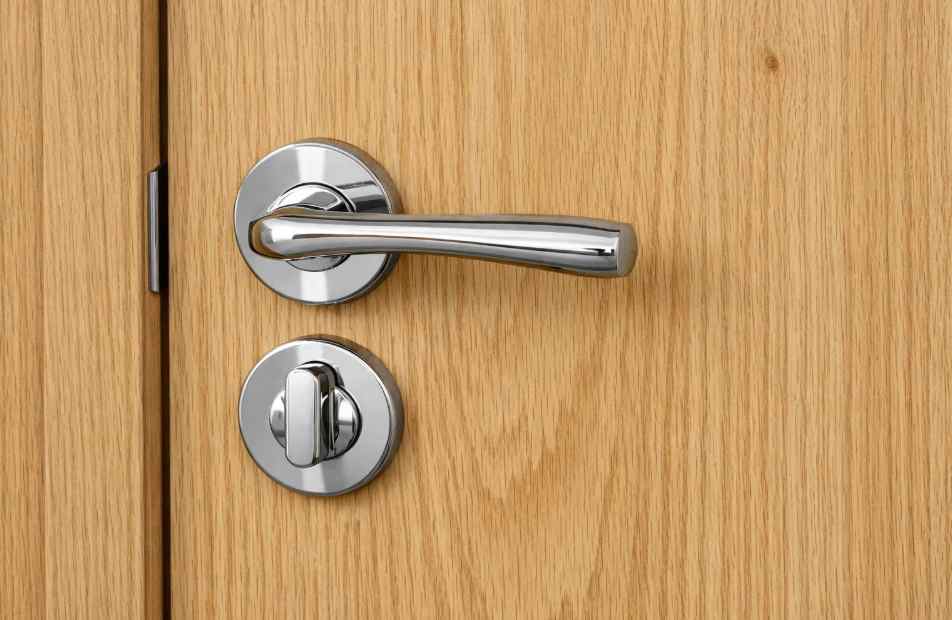
Everyone has an opinion about door handles. Lever or knob. Round or square. Brushed nickel or matte black. The finish decision gets made with care, sometimes over several visits to a showroom.
The lock mechanism behind that handle gets about thirty seconds of consideration. Usually it’s whatever came with the house, or whatever the builder specified to a price.
That gap in attention is where most residential door security quietly fails. The handle is visible. The lock body is hidden. But the lock body is the thing that actually determines whether the door stays closed when it needs to.
What Hinged Door Lock Types Actually Mean
The terminology around hinged door locks confuses most buyers, and the confusion leads to mismatched purchases. A quick breakdown of what matters.
Bored locks — also called key-in-lever or key-in-knob — are the most common type on residential hinged doors in New Zealand. They install through a bore hole in the door face and an edge bore for the latch. They’re easy to retrofit, widely available, and suit most standard residential applications. Their limitation is engagement depth — a bored lock latch extends a relatively short distance into the strike, which means the door-to-frame gap tolerance matters.
Mortice locks sit in a pocket cut into the door edge rather than a bored hole. They’re structurally more integrated with the door and typically offer higher security ratings — particularly multipoint and four-point mortice systems that engage the frame at multiple points simultaneously. Mortice locks are the standard for commercial applications and are increasingly common on premium residential projects. They require more installation work but deliver meaningfully better performance.
Deadbolts operate independently from the latch — you lock them deliberately with a key or thumbturn rather than just closing the door. A door with a latch only is latched. A door with a latch and a deadbolt is locked. That distinction matters at 11pm when you’ve assumed the door is secure because it’s closed.
Doric’s DN970 and DN71 mortice locks use direct gear drive for positive locking, with deadbolts available in 22mm, 28mm, and 37mm throw lengths. The longer the throw, the deeper the bolt extends into the frame — and the more force required to defeat it. Handle mounting at both 45 and 90 degrees accommodates the door configurations found across New Zealand’s residential stock without modification.
The Multipoint Question
A standard single-point lock engages the frame at one location — typically mid-height on the door. A multipoint lock engages at two, three, or four points simultaneously: mid-height, top, and bottom.
The security improvement is real. A door secured at one point can be levered open by applying force above or below that point — the door flexes, the single engagement point becomes the pivot, and the gap created is exploitable. A door secured at three or four points doesn’t flex the same way because there’s no unsecured section long enough to create meaningful leverage.
The other benefit of multipoint locking is draught and weatherseal compression. A lock that engages the frame at three heights pulls the door flat against the seal at all three points simultaneously. The result is a door that seals better, rattles less, and stays tighter over time as the door and frame move with seasonal humidity changes.
For new builds and major renovations in New Zealand’s climate, multipoint hinged door locks are worth specifying over single-point alternatives from the outset. Retrofitting them later requires modifying the door edge — more work and more cost than getting it right at installation.
Where Digital Locks Fit Into This Picture
When you buy digital door locks, you’re making a decision about access method — fingerprint, Bluetooth, passcode, or card rather than a physical key. You’re not necessarily making a decision about the lock mechanism itself.
This is a distinction that matters and rarely gets explained clearly.
Doric’s DE10 and DE20 are complete entry lock replacements — the digital access module combined with the lock body. The security of the mechanism is built in. What they replace is a standard bored entry lockset, which means the installation sits in the standard bored hole configuration.
What digital locks don’t replace is a mortice lock system or a multipoint engagement system. A door that was previously secured by a high-security mortice deadbolt doesn’t get a direct digital equivalent by fitting a DE10 — it gets a digital bored lock that performs to bored lock standards.
For many standard residential entry doors in New Zealand — which are spec’d with standard bored locksets from new — this isn’t a limitation. The digital upgrade is a genuine security and convenience improvement over the standard cylinder it replaces. But for doors that have been specifically upgraded to mortice or multipoint systems, understanding what the digital lock replaces is worth thinking through before purchase.
Handles, Levers, and Why Quality Matters Over Time
The mechanical performance of a lever handle degrades predictably. Springs fatigue. Tolerances wear. A handle that had crisp, immediate return when new starts to droop slowly over years of daily use.
On an internal door, this is a minor nuisance. On an entry door, it’s a signal that the mechanism is wearing — and worn mechanisms are the ones that fail at inconvenient moments.
Quad-sprung lever mechanisms — which use four springs rather than the standard one or two — maintain their return action significantly longer under heavy use. The DS1500 series in marine-grade 316 stainless steel uses this mechanism, which is why it’s specified on commercial applications where daily cycle counts are multiples of residential use.
For a residential entry door used by a household of four people ten times a day, the difference in mechanism quality shows up in year five and year eight, not year one. It’s the kind of specification decision that looks conservative at purchase and obvious in retrospect.
Frequently Asked Questions
What’s the most secure hinged door lock for a residential NZ home? A multipoint mortice lock with a 28–37mm deadbolt throw, installed on a door with security hinges and a reinforced strike plate. This combination addresses This combination improves resistance to common weaknesses such as poor frame engagement, bolt attack, and kick-in attempts. Single-point bored locks are adequate for most standard residential applications but don’t reach this performance level.
Can I replace a standard hinged door lock with a digital lock myself? On a standard residential door with a bored hole configuration, yes — the DE10 and DE20 are designed for homeowner installation. On aluminium joinery or doors with non-standard backsets, having a joinery installer check the fit before committing is worth the time. Getting the backset measurement wrong means the digital unit doesn’t align with the strike, which requires door modification to fix.
What does “backset” mean and why does it matter? Backset is the distance from the edge of the door to the centre of the lock bore. Standard NZ residential doors use either 60mm or 70mm backset — the lock body must match the door’s backset to sit and operate correctly. Most Doric lock products accommodate both, but confirming before ordering eliminates the most common installation problem.
Are key-in-lever and key-in-knob locks equally secure? Lever handles offer no inherent security advantage over knobs — both use the same bored lock body. The practical difference is access: lever handles are easier to operate under load (shopping bags, wet hands) and are required under NZ accessibility guidelines in certain building types. Security differences between lever and knob configurations come from the lock grade, not the handle type.
Should I replace hinges at the same time as upgrading door locks? If the door has any drop — visible as the latch not engaging cleanly without lifting the handle — yes. Worn or loose hinges allow door movement that stresses the lock engagement and degrades both components faster. Replacing both at the same time is more efficient and ensures the whole system performs to the same standard.
The Mechanism Behind the Handle
Door handles get chosen for how they look. Hinged door locks should be chosen for how they perform — under load, over years, against the kind of pressure an entry door eventually faces.
When you buy digital door locks, you’re choosing how you access the mechanism. The mechanism itself still matters. A digital interface on a robust, correctly specified lock body is a genuine security upgrade. The same digital interface on a worn, undersized, or poorly installed lock is a more expensive version of the same problem.
Start with the mechanism. The access method follows from that.